

Polished Concrete & Grinding
Grinding, densifying and polishing existing concrete into a durable architectural floor — no coating to wear through, because the concrete is the finish.
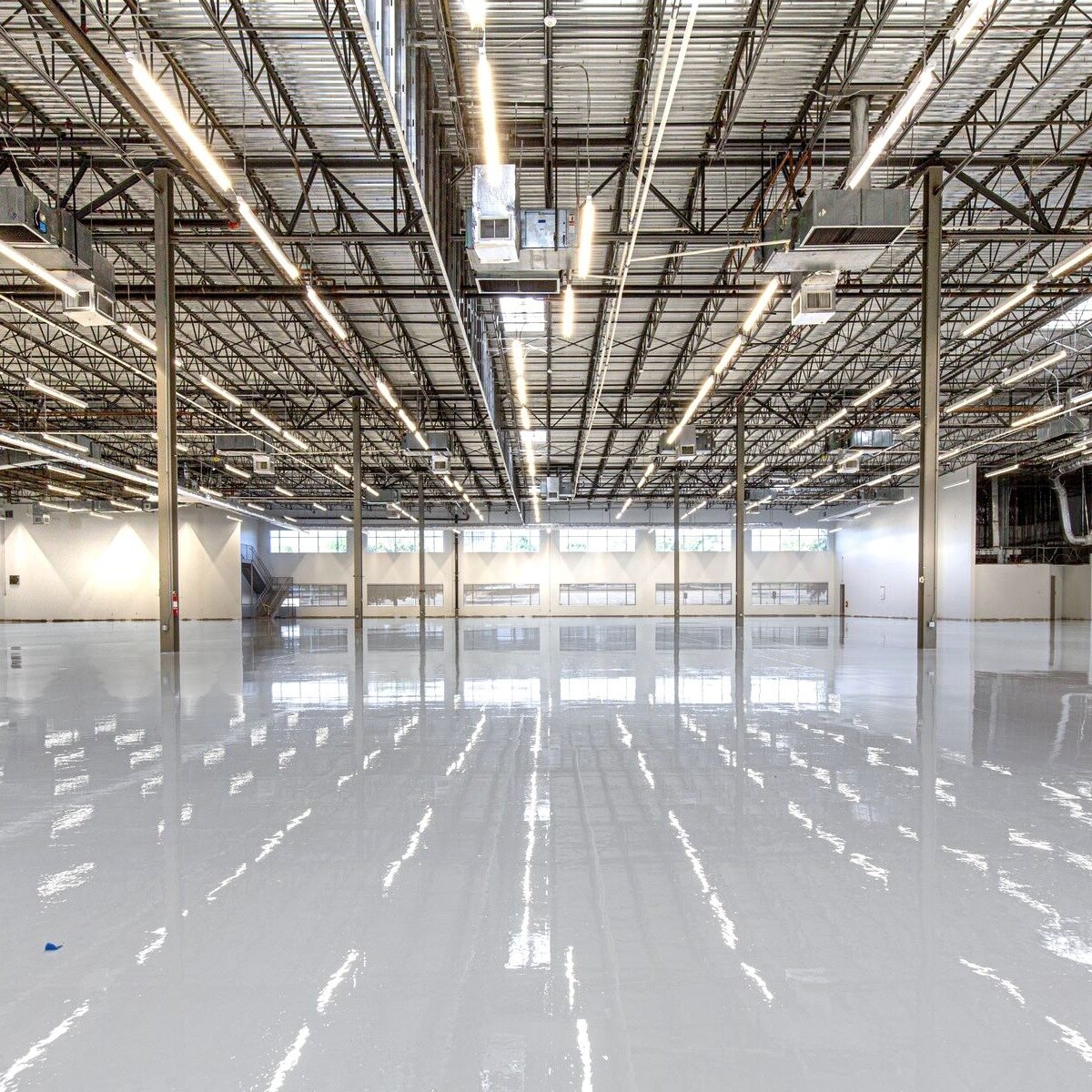 03 · Flooring
- Dull, stained or uneven existing slabs
- Old adhesive, paint or coating to remove
- Retail and lobby floors that need a low-maintenance finish
- Warehouse floors with dusting or wear lanes
- Residential interiors wanting an exposed-concrete look
The finish is chosen before the first pass.
Coarse metal-bond diamonds level the slab and expose cream, salt-and-pepper or full aggregate depending on the look wanted.
A lithium or sodium silicate hardener that reacts with the concrete to increase surface density and abrasion resistance.
Resin-bond steps to a matte, satin or high-gloss sheen, then a penetrating guard against staining.
- 01Assess the slab
Hardness, flatness, existing coatings and cracks decide the grinding plan and the achievable finish.
- 02Grind and repair
Coarse grinding to the target exposure; cracks and joints filled to match.
- 03Densify
Hardener applied and allowed to react before the polishing steps begin.
- 04Polish and protect
Progressive polishing to the chosen sheen, finished with a stain guard.
Retail, lobbies, warehouses, showrooms, residential interiors.
Proper surface preparation — typically mechanical grinding — is what allows a coating to bond. Skipping it is the most common reason coatings fail early.
Both are seamless coating systems. Polyaspartic generally cures faster and offers strong UV stability; epoxy offers a well-established build and bond. They are often combined within one floor system.
Start with the concrete.
Fix it properly.
Tell us what you’re seeing and where. We’ll assess the condition on site and recommend the system that fits — or tell you if a different approach is the right one.