

Traffic Coating
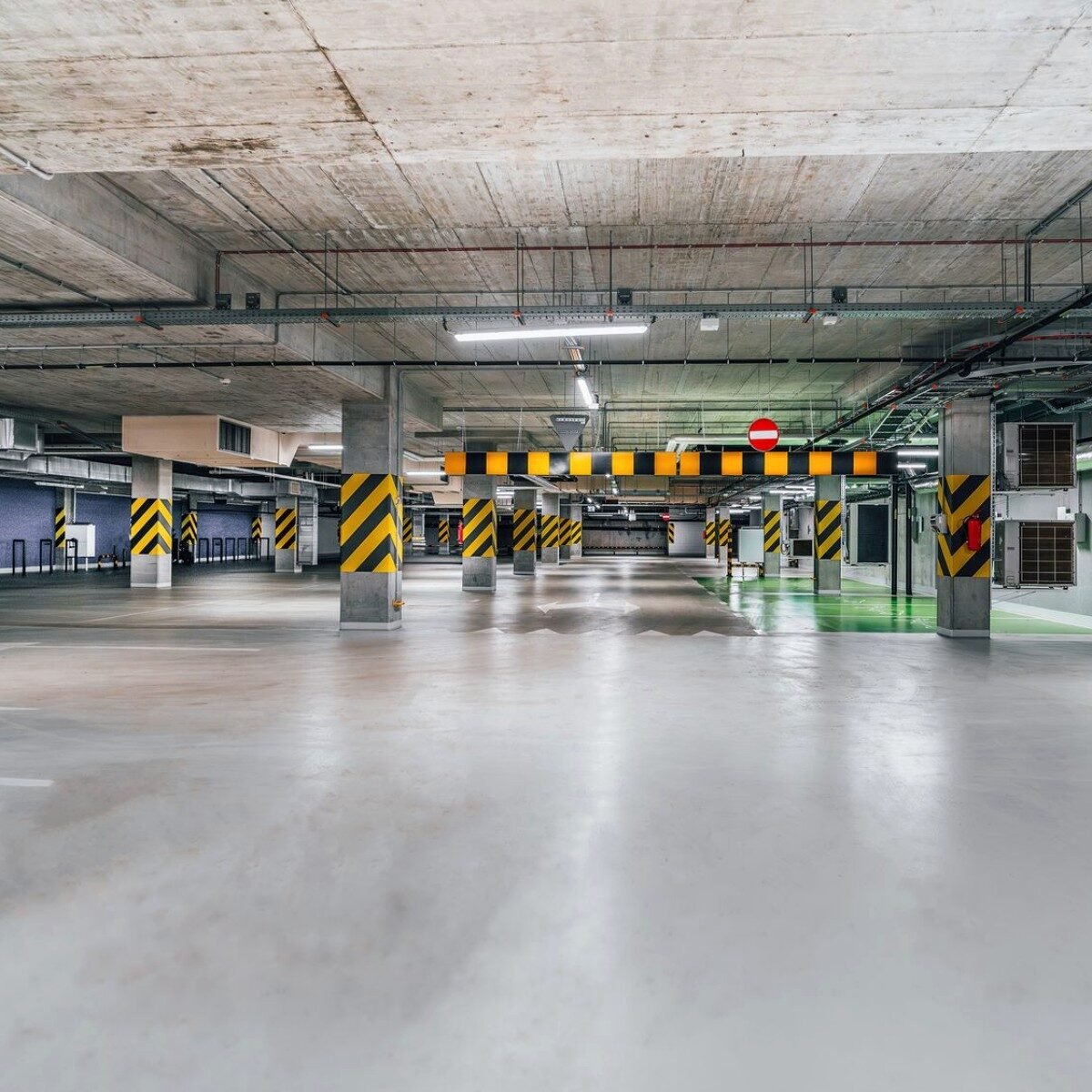
Multi-layer urethane membranes for parkades, ramps and suspended slabs — protecting the structure from water, salt and chloride while carrying vehicle traffic every day.
 05 · Protection
- Leaking parkade slabs and stained ceilings below
- Worn or delaminating existing traffic membranes
- Salt and chloride exposure at entry ramps
- Suspended slabs over occupied or mechanical space
- Exposed rebar or spalling on the deck surface
Different builds for stalls, drive lanes and ramps.
The waterproofing layer — a flexible urethane bonded to the prepared slab and detailed into cracks, joints and drains.
Broadcast aggregate in a urethane coat gives slip resistance and abrasion protection, built heavier in drive lanes and ramps.
Sealing topcoat, then line markings and stall numbering to finish the deck.
- 01Assess the deck
Cracks beneath the surface, existing coating condition and where water is reaching the slab below.
- 02Prepare and inject
Removal of failed coating, grinding, and crack injection where water is entering.
- 03Build the membrane
Primer, base membrane, then wear coats matched to traffic.
- 04Mark and hand over
Line markings, cure and a phased return to service so the parkade stays usable.
Parkades, ramps, suspended slabs, loading areas.
It depends on exposure, foot or vehicle traffic, moisture and the condition of the substrate. Polyurethane, polyaspartic and epoxy systems each have a place; we recommend based on those factors.
We look at where water shows, the crack pattern, the surrounding construction and moisture readings, then trace the likely pathway back to its source before deciding on a repair.
Start with the concrete.
Fix it properly.
Tell us what you’re seeing and where. We’ll assess the condition on site and recommend the system that fits — or tell you if a different approach is the right one.